Backpack vs. handheld leaf blower: which should you buy?
Quick answer
Choose a handheld leaf blower for quick cleanup, tight spaces, compact storage, and the lowest total carried weight. Choose a backpack blower when heavy debris, a long route, or repeated extended sessions make arm fatigue the limiting factor. Compare power source, operating weight, verified airflow, runtime, sound, and maintenance separately because a backpack is not automatically gas-powered or more capable.
Common questions
- Are backpack leaf blowers better than handheld blowers?
- Backpack blowers are usually a better ergonomic fit for long clearing sessions because the harness transfers most of the machine load from one hand to the torso. Handheld blowers are usually easier for short jobs, tight spaces, transport, and storage. Neither form factor is automatically better for every property.
- Do backpack leaf blowers always have more power?
- No. Form factor and power are separate. Current product ranges include battery and gas models in both handheld and backpack formats, and published CFM, MPH, Newton force, runtime, and operating modes vary by model. Compare verified specifications under equivalent test conditions.
- Is a backpack blower less tiring than a handheld blower?
- A properly adjusted backpack can reduce sustained hand, wrist, and forearm loading, but it has more total carried weight and may add heat, vibration, and harness pressure. Try the complete operating configuration and confirm the harness fit before buying if comfort is a deciding factor.
Source note: Reviewed against current Husqvarna leaf-blower buying guidance and battery-backpack documentation plus STIHL handheld and backpack blower safety manuals. Product output, runtime, weight, sound, fuel, charging, maintenance, and safety requirements must be verified for the exact model and configuration.
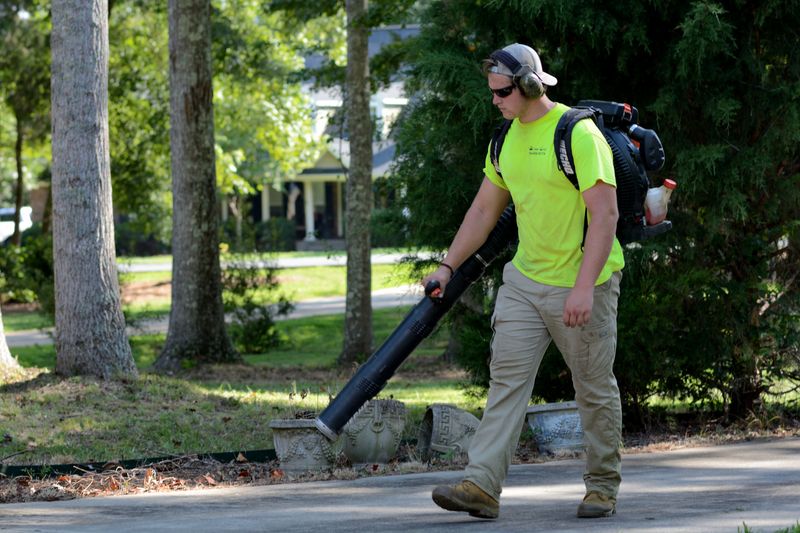
For most quick residential cleanup, a handheld leaf blower is the simpler choice. Move to a backpack blower when heavy debris, a long route, or extended sessions make arm fatigue more important than compact size.
Do not confuse form factor with power source. Handheld and backpack blowers are both available in battery and gas versions, so compare how the tool is carried separately from how it is powered.
Backpack vs. handheld leaf blower at a glance
| Decision factor | Handheld blower | Backpack blower |
|---|---|---|
| Property and route | Small or obstacle-heavy areas; short travel to the pile | Large or repeated routes with significant material |
| Debris | Clippings, dust, and manageable dry leaves | Sustained movement of deep, wet, or mixed debris when verified output fits |
| Session length | Quick cleanup and stop-start work | Longer continuous or repeated sessions |
| CFM and MPH | Can be high or low; verify the exact model | Can be high or low; do not assume from format |
| Carried weight | Lower total weight, all supported by the hand and arm | Higher total weight, distributed by the harness and torso |
| Fatigue trade-off | More wrist, grip, and arm loading over time | Less hand-supported mass, but more torso load, heat, and setup |
| Runtime or refueling | Often sized for shorter tasks; configuration controls the result | Often configured for longer duty, but battery or fuel details still control |
| Noise | Power source and model matter more than shape | Power source and model matter more than shape |
| Storage | Compact and quick to grab | More floor or wall space; protect the tube and harness |
| Maintenance | Depends mainly on battery, corded, or gas design | Depends mainly on battery or gas design, plus harness and frame checks |
This is a workload guide, not a promise that one format will outperform the other. The Husqvarna leaf blower buying guide similarly points to handheld units for shorter work and smaller amounts of leaves, and backpack units for longer work with more material.
Start with the actual clearing route
Property acreage alone is a poor shortcut. A large open lawn with few trees may be easier than a small yard packed with beds, steps, fences, gravel, and narrow gates.
Before shopping, record:
- Where debris starts and ends. A long trip to a compost area is different from clearing a nearby driveway.
- The hardest debris. Note dry leaves, wet mats, pine needles, twigs, or clippings.
- The surfaces and obstacles. Turf, pavement, gravel, mulch, vehicles, plants, and sidewalks change the control required.
- A realistic session time. Include repositioning, battery changes, refueling, and collection—not just trigger-on time.
If fall leaves are the main workload, decide whether you will mulch-mow, collect, compost, or move them to the curb. The fall lawn care guide helps define that process. For routine post-mowing cleanup during hot weather, the summer lawn care guide can help reduce unnecessary clippings and turf stress before you size a blower around them.
Match form factor to session length and fatigue
A handheld puts the power unit, controls, and reaction force in one hand. It is agile around steps and beds, but grip, wrist, forearm, shoulder, or back fatigue may limit a long session.
A backpack transfers most machine weight to shoulder straps and, where fitted, a waist belt. The arm guides the tube instead of supporting the power unit. The trade-off is more total carried weight, extra setup, heat, and bulk near obstacles.
Harness design is not automatically ergonomic. The current STIHL backpack blower safety manual directs operators to adjust it before work and practice a quick exit. Try a candidate in its operating configuration, adjust every strap, and check tube control.
Compare CFM, MPH, and force without assuming
Backpack does not guarantee higher output, and handheld does not mean light duty. Compare the exact models you can buy using figures published under equivalent conditions.
- CFM describes air volume and often matters when moving a broad mass of loose material.
- MPH describes airspeed and can help loosen stuck or matted debris.
- Newton force, when the manufacturer reports it under a stated method, reflects outlet thrust.
No single figure captures clearing width, trigger control, runtime, balance, or fatigue. Use the leaf blower CFM vs. MPH comparison and worksheet before treating a box number as a performance ranking.
For an honest comparison, record the nozzle, measurement point, operating mode, and whether boost can be sustained. A maximum with the tube removed or boost engaged is not equivalent to a sustained figure at the working nozzle.
Choose battery or gas as a separate decision
Once the form factor fits, choose the power source.
Battery models offer instant starting, no fuel mixing, and no exhaust at the tool. Check operating weight, runtime in the required mode, recharge time, total battery capacity, and temperature protection. The current Husqvarna 340iBT battery backpack manual shows why configuration matters: battery behavior changes with installed packs, workload, and temperature.
Gas models can resume after refueling, which may suit long routes without charging access. They add fuel requirements, exhaust, starting procedures, hot surfaces, and engine maintenance. Use the current model manual.
Corded handheld blowers can suit a small area with safe outlet access, but cord routing and electrical ratings must fit the tool and site.
Noise and safety can overrule the format choice
Do not assume a handheld is quiet or a backpack is loud. Compare the manufacturer’s sound-pressure and sound-power data, noting test standards, distance, and operating mode. Then check local equipment restrictions, operating hours, HOA rules, jobsite requirements, and seasonal fire restrictions.
Both current STIHL form-factor manuals warn that tool noise can damage hearing and call for hearing protection. Follow the exact manual and workplace assessment. Eye protection, stable footwear, bystander control, and a projectile inspection matter for either format.
Gas-specific precautions deserve extra attention. The STIHL backpack manual warns that the muffler and engine parts remain hot after shutdown and that a hot, pressurized fuel system can release fuel or vapor. Shut the engine down, let it cool, keep it away from combustibles, and follow the model’s fuel-cap procedure before refueling.
For battery equipment, remove the pack before maintenance when directed, inspect it, use approved chargers, and follow wet-condition and temperature limits. Stop using a damaged, swollen, leaking, or unusually hot pack and follow manufacturer guidance.
Account for storage and maintenance
A handheld usually wins when storage is tight. A backpack needs room for the frame and harness; protect its tube, intake, controls, and battery mount from damage.
Maintenance follows the power source more than the carrying format:
- Battery: clean cooling openings, inspect terminals and latches, store and charge packs as directed, and keep firmware or diagnostic requirements in mind.
- Gas: use the specified fuel and oil, inspect the fuel system and air filter, and follow model intervals for the spark plug, cooling passages, and spark-arresting screen.
- Any blower: inspect tubes, fasteners, controls, guards, intakes, and labels; backpack owners should also check straps, buckles, frame, and emergency release.
A five-question buying decision
Use these questions to turn the comparison into a shortlist:
- Can a handheld finish the hardest normal job before arm fatigue changes technique or forces a stop?
- Is that job frequent enough to justify a backpack’s extra weight, setup, storage, and harness care?
- Do verified CFM, MPH, force, runtime, and sound data match the debris and route under comparable conditions?
- Can the battery plan or refueling plan finish the work safely without relying on peak mode the whole time?
- Is the exact tool allowed under local noise, emissions, fire, and operating-hour rules?
If answers one and two are close, rent or demo both formats on a representative section to evaluate fit, controls, clearance, weight, and fatigue.
Next step: shortlist the form factor, then verify the model
Choose handheld for short, precise, grab-and-go work. Choose backpack when sustained workload makes hand-supported weight the bottleneck. Then verify the complete operating weight, current manual, CFM/MPH test conditions, usable runtime, sound data, included battery or fuel requirements, and dealer support for two or three candidates.
Use the best leaf blower guide for 2026 as a starting list—not a substitute for checking current manufacturer specifications and local rules. The right form factor is the one that finishes your real route with safe control and acceptable fatigue, not the one with the largest number on the box.
Sources and image credit

TurfTech HQ Editorial Team
Independent trade-focused editorial team