How to Improve Clay Soil in Your Lawn
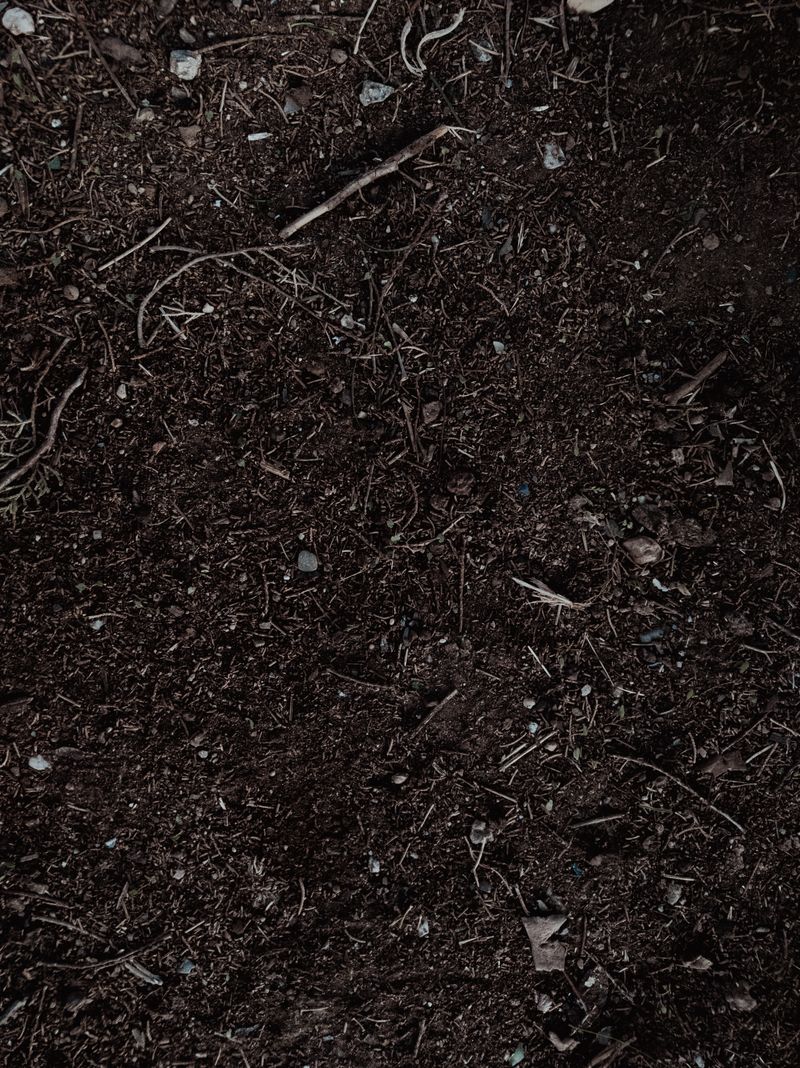
Clay soil has a reputation — and not a good one. It gets waterlogged in spring, bakes into concrete in summer, and compacts under foot traffic until grass roots simply can’t penetrate it. If you’ve got clay, you know the frustration: you fertilize, you water, you seed — and your lawn still looks thin and stressed while your neighbor’s (apparently identical) lawn looks lush.
Here’s the good news: clay soil is actually nutrient-rich. It holds more minerals and organic compounds than sandy soil. The problem is structure, not fertility. Fix the structure, and clay soil becomes one of the best growing media available.
The bad news: this takes time. We’re talking about a 2–5 year improvement process, not a weekend fix. But if you commit to the right approach, you will see meaningful progress every single year — and the results are worth it.
Understanding Clay Soil: Why It Behaves the Way It Does
Clay is made of very fine mineral particles — far smaller than silt or sand particles. These tiny particles pack tightly together, leaving little room for air or water to move through the soil profile.
The Structural Problem
The core issues with clay soil are:
- Poor drainage: Water fills the tiny pore spaces and drains slowly. Roots sit in saturated soil and can suffer from oxygen deprivation (root rot).
- Compaction: Clay particles compress easily under foot traffic, mowing, and even rainfall. Over time, even the limited pore space collapses.
- Surface crusting: When clay dries after being wet, it can form a hard crust that blocks air, water, and seedling emergence.
- Poor root penetration: Compacted clay is physically difficult for grass roots to push through. Shallow roots mean drought-stressed, thin turf.
The Upside of Clay
Don’t write off your clay soil entirely. It has genuine advantages:
- High cation exchange capacity (CEC): Clay particles hold positively charged nutrient ions — calcium, magnesium, potassium, and more — and make them available to grass roots. Clay soils are naturally more fertile than sandy soils.
- Better water retention in drought: Once amended and healthy, clay-based soils hold moisture longer than sandy soils, reducing irrigation needs.
- Good nutrient retention: Applied fertilizers leach less quickly through clay than through sand.
The goal is to unlock these advantages by improving the physical structure of the soil — without destroying what makes clay nutrient-rich.
Signs You Have Clay Soil
Not sure if your soil is truly clay? Here are the telltale signs:
- Water puddles after rain and takes more than 30–60 minutes to drain
- Soil cracks visibly during dry periods
- Lawn feels spongy or sticky when wet
- Footprints or tire tracks stay compressed and visible in the lawn
- Grass turns yellow during wet springs (waterlogging)
- Lawn dries hard as concrete in July and August
The Ribbon Test
Take a small amount of moist soil and try to roll it into a ribbon between your thumb and forefinger. If you can form a ribbon longer than 2 inches that holds its shape, your soil has significant clay content. The longer and smoother the ribbon, the more clay you have.
Jar Sedimentation Test
Fill a clear jar with 1 cup of soil and 2 cups of water. Shake vigorously and let it settle for 24–48 hours. Sand settles first (bottom layer), silt next, and clay last (top layer, which may remain cloudy for days). Measure the layers to estimate your soil’s texture composition.
Amendment Option 1: Gypsum
Gypsum (calcium sulfate) is one of the best tools for improving clay soil, and it’s widely misunderstood. It doesn’t raise soil pH like lime does (it’s pH-neutral), and it doesn’t “break up” clay by any physical mechanism. What it does is flocculate clay particles — causing them to clump together into larger aggregates, which creates larger pore spaces for water and air movement.
The calcium in gypsum displaces excess sodium and magnesium in sodium-rich (sodic) clay soils — a common issue in arid regions and areas with hard irrigation water. This chemical process genuinely improves clay structure over time.
How to Apply Gypsum
- Apply 40–50 lbs per 1,000 sq ft as an initial heavy treatment on problem clay soil
- Follow up with 20–25 lbs per 1,000 sq ft annually as maintenance
- Apply in spring or fall; water in well after application
- Products like Hi-Yield Gypsum and Encap Gypsum are available in pelletized form for easy spreading with a broadcast spreader
Important caveat: Gypsum works best on sodic soils (high sodium content). On most ordinary clay soils, the effect is modest but still beneficial. It works even better when combined with organic matter.
Does Gypsum Work for All Clay?
Not equally. If your clay soil is not sodium-rich, gypsum’s impact will be more limited. But it’s non-toxic, won’t harm your lawn, and provides calcium and sulfur as nutrients — so there’s little downside to applying it.
Amendment Option 2: Organic Matter and Compost
This is the single most important long-term amendment for clay soil. Organic matter is the foundation of soil structure. As microorganisms decompose compost and organic materials, they produce substances that bind clay particles into aggregates — creating the crumb-like texture you see in healthy garden soil.
Annual Compost Topdressing
Apply ¼ inch of screened, finished compost to your lawn surface each fall (or spring). Over 3–5 years, this practice measurably increases organic matter in the top 2–4 inches of soil, fundamentally improving clay’s structure, drainage, and biological activity.
Use bagged screened compost for small lawns or order bulk compost for larger properties. A lawn leveling rake spreads it evenly between grass blades.
How Much Difference Does It Make?
Research from university extension programs consistently shows that each 1% increase in organic matter allows soil to hold an additional 20,000 gallons of water per acre — and dramatically improves aeration and root penetration. Most lawn soils start at 1–3% organic matter. Getting to 4–5% transforms clay soil’s behavior.
Annual topdressing with compost will get you there over time. There’s no shortcut.
Amendment Option 3: Core Aeration
Core aeration is essential for clay soil lawns. It’s the only practical way to mechanically relieve compaction without tearing up your lawn.
A core aerator pulls cylindrical plugs of soil out of the ground — typically ½ to ¾ inch in diameter and 2–3 inches deep. This opens channels that allow air, water, and nutrients to penetrate the compacted layer.
Aeration Guidelines for Clay Soil
- Frequency: Aerate twice per year — once in spring and once in fall — on heavily compacted clay lawns. Once per year (fall) is minimum.
- Direction: Make two passes in opposite directions (perpendicular to each other) for thorough coverage.
- Moisture: Aerate when soil is moist but not waterlogged. Completely dry clay soil is too hard to aerate effectively.
- Leave the plugs: Don’t rake up aeration cores. Leave them on the surface to break down naturally — they add organic matter and beneficial microbes back to the lawn.
After aeration, immediately apply compost topdressing and/or gypsum. The open channels allow these amendments to reach the root zone directly rather than sitting on the surface.
Equipment Options
- Rental core aerators: Available at most equipment rental stores for $60–$100/day. Most are gas-powered walk-behind machines.
- Tow-behind aerators: Attach to a riding mower. Good for large properties, but typically not as aggressive as walk-behind machines.
- Manual core aerators: Hand tools with hollow tines. Practical only for small patches.
The Common Mistake: Adding Sand Without Organic Matter
This is the most damaging misconception in clay soil management, and it’s worth addressing directly.
Adding sand to clay soil without a very large amount of organic matter makes things worse, not better. The physics of small clay particles mixed with sand produces something closer to cement than loose, well-draining soil. To actually improve drainage with sand, you’d need to add so much sand (often more than 50% of the total soil volume) that it’s impractical for an existing lawn.
The correct approach is never pure sand. Instead:
- Use compost as your primary amendment
- If using a blended topdressing mix, ensure it contains substantial compost
- Reserve sand for blended professional mixes in sports field situations
Grass Varieties That Tolerate Clay Best
While you’re improving your soil, choosing the right grass type for clay conditions helps your lawn survive in the meantime.
Cool-Season Grasses (Northern Lawns)
- Tall Fescue: The best cool-season grass for clay. Deep root system, tolerates wet conditions better than other fescues, and handles both drought and waterlogging reasonably well.
- Kentucky Bluegrass: Moderate clay tolerance. Does better with consistent aeration.
- Perennial Ryegrass: Tolerates clay reasonably well but doesn’t have as deep a root system as tall fescue.
Warm-Season Grasses (Southern Lawns)
- Zoysiagrass: Excellent clay tolerance. Slow to establish but extremely tough once it fills in. Handles compaction better than most warm-season grasses.
- Bermudagrass: Tolerates clay if properly aerated. Very aggressive and recovers quickly from traffic damage.
- Buffalograss: Good clay tolerance in the Central Plains. Native prairie grass that evolved on heavy soils.
Grasses to avoid on clay: Fine fescues (poor waterlogging tolerance), Centipedegrass (very sensitive to compaction and poor drainage).
Avoiding Common Mistakes
Mistake 1: Tilling Your Lawn to Fix Clay
Rototilling a clay lawn disrupts the existing soil structure, kills beneficial fungi networks, buries surface organic matter, and usually makes the problem worse. Unless you’re doing a full lawn renovation (remove all turf, deep-till, heavily amend, and reseed), avoid tilling.
Mistake 2: Expecting Fast Results
Clay soil improvement is a multi-year project. In year one, expect minor improvements in drainage and turf color. By year three, you should notice measurable improvements in soil texture, root depth, and lawn health. By year five, a well-managed clay lawn can be genuinely excellent turf.
Mistake 3: Applying Amendments Without Testing
Always test your soil before adding gypsum, lime, or heavy compost. Knowing your starting pH, organic matter percentage, and nutrient levels prevents over-application and helps you prioritize the most impactful amendments.
Mistake 4: Skipping Aeration
On clay soil, aeration is not optional. No surface amendment — no matter how good — can work its way past severe compaction without those physical channels. Aerate first, then amend.
The Long-Term Improvement Timeline
Here’s a realistic picture of what to expect with a consistent clay improvement program (annual compost topdressing + twice-yearly aeration + gypsum):
Year 1: Improved surface drainage after heavy rain, slightly better color and density after fall overseed, aeration holes visible and beneficial.
Year 2: Noticeably better water infiltration, deeper root penetration starting to show in core samples, improved drought tolerance.
Year 3: Measurably improved soil texture in top 3–4 inches, significantly thicker turf, soil holds together better rather than puddling or cracking.
Year 5+: Soil has developed genuine crumb structure, clay behavior substantially modified, lawn requires less water and inputs to maintain.
Conclusion
Clay soil rewards patience and consistency. There’s no magic amendment that transforms it overnight — but systematic annual investment in compost topdressing, core aeration, and gypsum will produce dramatically better soil and lawn quality over time.
Start with a soil test to understand your baseline. Then commit to the annual aeration-and-topdress routine. Choose a clay-tolerant grass variety, and resist the urge to add sand without proper organic matter blending. The lawn you’ll have in five years will be worth every cubic yard of compost you spread today.

TurfTech HQ Editorial Team
Independent trade-focused editorial team