How to Mow Your Lawn Like a Pro
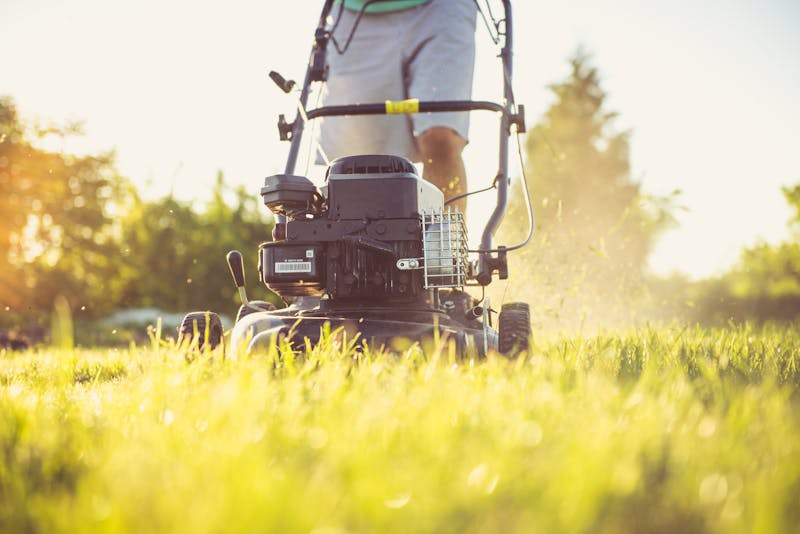
You’ve seen those lawns — the ones with perfect stripes, uniform height, and a deep, rich green color that practically glows in the afternoon sun. They don’t happen by accident. Behind every great-looking lawn is a mowing routine built on a handful of core principles that most homeowners never learn.
The good news? Mowing like a pro isn’t complicated. It’s about using the right technique, keeping your equipment sharp, and respecting what your specific grass type needs. This guide covers everything — mowing height, patterns, blade maintenance, frequency, grasscycling, wet versus dry mowing, and safety — so you can get professional-quality results every single time you push that mower.
Why Mowing Technique Matters More Than You Think
Mowing isn’t just cosmetic. How you cut your lawn directly affects root depth, disease resistance, drought tolerance, and weed pressure. A lawn that’s mowed too short is stressed, thin, and vulnerable. A lawn mowed at the right height develops deeper roots, shades out weeds naturally, and handles heat and drought far better.
Poor mowing habits are one of the leading causes of thin, patchy, weed-infested lawns — and most homeowners never connect the dots. Let’s change that.
Mowing Height by Grass Type
The single most important mowing decision you make is how tall to cut your grass. Different grass species have evolved different growth habits, and cutting them at the wrong height forces the plant to divert energy away from roots and into stressed recovery.
Cool-Season Grasses
Cool-season grasses grow most actively in spring and fall. They benefit from being kept slightly taller, especially during summer heat.
- Kentucky Bluegrass: 2.5 – 3.5 inches. Never cut below 2 inches, especially in summer.
- Tall Fescue: 3 – 4 inches. Tall fescue thrives tall. Taller cutting promotes its deep root system.
- Fine Fescue: 2.5 – 3.5 inches. Low-growing and low-maintenance; avoid scalping.
- Perennial Ryegrass: 2 – 3.5 inches. Tolerates slightly lower heights than bluegrass or fescue.
Warm-Season Grasses
Warm-season grasses grow low and dense. Many tolerate — and even prefer — a shorter cut.
- Bermuda Grass: 0.5 – 1.5 inches. Can be cut very short; thrives under aggressive mowing.
- Zoysia Grass: 1 – 2 inches. Dense and slow-growing; mow infrequently to avoid stress.
- St. Augustine Grass: 2.5 – 4 inches. Keep it on the taller side to protect against chinch bugs and heat.
- Centipede Grass: 1.5 – 2 inches. Do not over-fertilize or cut too short — this grass is sensitive.
- Buffalo Grass: 2 – 3 inches. Very low-maintenance; mow infrequently.
The One-Third Rule
No matter what grass type you have, never remove more than one-third of the blade length in a single mowing. Cutting off more than that shocks the plant, damages the crown, and forces it into recovery mode instead of growth mode.
If your lawn has gotten too long — say, after a vacation — raise the mowing height for the first pass, then gradually lower it over the next two or three mowings. Never scalp it back to the ideal height in one shot.
Mowing Patterns: Stripes, Checkerboard, and More
The striped patterns you see on baseball fields and golf courses aren’t just decorative — they’re the result of bending grass blades in alternating directions, which reflects light differently and creates visual contrast. You can achieve the same effect at home.
Basic Straight Stripes
- Mow in parallel lines, alternating direction with each pass.
- Overlap each pass by a few inches to avoid missed strips.
- Use the edge of your driveway, sidewalk, or fence line as a guide for your first pass, then follow that line.
Checkerboard Pattern
- Mow straight stripes in one direction across the entire lawn.
- Make a second pass perpendicular to the first.
- The intersecting lines create a classic checkerboard look.
Diagonal Stripes
- Run your stripes at a 45-degree angle to the house or street.
- This can make a small lawn appear larger and hides uneven terrain better than straight lines.
Circular Patterns
- Start at the outermost edge of the lawn and spiral inward.
- Great for irregularly shaped yards and adds a unique look.
- Alternate the spiral direction each mow to avoid ruts.
Pro tip: A lawn striping kit attaches to the rear of your mower and bends blades more aggressively for dramatically more defined stripes. Many attach to standard residential mowers.
Regardless of the pattern you choose, rotate your mowing direction every time you mow. Mowing the same direction repeatedly compacts soil in tracks and causes grass to lean permanently in one direction.
Blade Sharpening and Mower Maintenance
A dull mower blade doesn’t cut grass — it tears it. Torn grass tips turn brown, create ragged edges, and open the plant to disease and moisture loss. Sharp blades are one of the highest-leverage things you can do for lawn health.
If the finish has distinct ridges, scalped areas, or narrow missed paths, use our mower uncut-strip and uneven-cut diagnostic workflow before changing deck adjustments.
How to Know When Your Blade Needs Sharpening
- Pull up a blade of grass after mowing and inspect the cut edge. A sharp blade leaves a clean, flat cut. A dull blade leaves a frayed, torn, or uneven edge.
- Visible browning of grass tips within a day or two of mowing is a major tell.
- As a general rule, sharpen your blade every 20–25 hours of mowing time, or about once a month during peak mowing season.
How to Sharpen Your Mower Blade
- Disconnect the spark plug wire before working under the mower.
- Tip the mower on its side (carburetor side up to prevent oil leaks).
- Use a blade removal tool or breaker bar to loosen the blade bolt — it’s usually reverse-threaded.
- Secure the blade in a vise and use a file or angle grinder to restore the cutting edge at the original bevel angle (usually 30–45 degrees).
- Check blade balance using a blade balancer or nail on the wall. An unbalanced blade causes vibration and bearing wear.
- Reinstall and retighten securely.
A dedicated blade sharpening kit makes this process fast and foolproof. Alternatively, hardware stores will sharpen blades for a few dollars.
Other Mower Maintenance Essentials
- Change the oil every 50 hours or once per season on gas mowers.
- Replace the air filter annually or when visibly clogged.
- Check and clean the underside deck regularly. Caked grass buildup reduces airflow and promotes rust.
- Inspect the spark plug each season and replace if fouled.
- Check tire pressure on riding mowers — uneven tires cause uneven cuts.
Mowing Frequency: How Often Is Often Enough?
There’s no universal mowing schedule. Your lawn tells you when it’s ready to be mowed — not the calendar. The right frequency depends on growth rate, which varies by grass type, season, temperature, and rainfall.
General Frequency Guidelines
- Spring and fall (cool-season grasses): Every 5–7 days during peak growth.
- Summer (cool-season grasses): Every 10–14 days as growth slows.
- Spring through fall (warm-season grasses): Every 5–10 days depending on rainfall and heat.
- Winter: Little to no mowing for most grass types.
The goal is to always stay ahead of the one-third rule. If your lawn grows fast, mow more often. If growth slows, stretch the interval. Skipping mows and then cutting aggressively is one of the most damaging things you can do to a lawn.
Grasscycling: Why You Should Leave Your Clippings
Grasscycling means leaving your grass clippings on the lawn instead of bagging them. It’s one of the easiest ways to improve lawn health at zero cost.
Here’s why it works:
- Grass clippings are roughly 80–85% water and break down quickly.
- They return nitrogen, phosphorus, and potassium back to the soil — the same nutrients you pay for in fertilizer bags.
- Studies show grasscycling can reduce fertilizer needs by up to 25%.
- It does NOT cause thatch. Thatch is composed primarily of roots and stems, not leaf blades.
For grasscycling to work well:
- Mow frequently enough that clippings are small (following the one-third rule makes this automatic).
- Use a sharp blade to produce fine, fast-decomposing clippings.
- Avoid grasscycling when the lawn is diseased, as it can spread pathogens.
A mulching blade is specifically designed for grasscycling — it has a curved profile that re-cuts clippings multiple times before depositing them as fine particles. Pair one with a mulching plug for your mower deck for best results.
If you prefer to bag clippings (for a cleaner look or when managing a disease outbreak), a quality grass catcher bag keeps your yard tidy with minimal effort.
Wet vs. Dry Mowing
The guidance here is simple: always mow dry grass when possible.
Problems with Mowing Wet Grass
- Wet clippings clump together and block the mower deck, leading to uneven cuts and straggly clumps left on the lawn.
- Clumps of wet clippings smother the grass beneath them, causing yellowing and potential disease.
- Wet grass compresses under the mower wheels, increasing soil compaction.
- Wet conditions promote the spread of fungal diseases from mower blades.
- Wet grass blades bend under cutting, leading to an uneven cut height.
When You Have No Choice
If you absolutely must mow wet grass:
- Raise the mowing height by half an inch.
- Slow your pace to allow better cutting.
- Clean and dry the mower deck frequently during and after mowing.
- Spread clumps with a rake or leaf blower immediately after mowing.
- Sharpen your blade more frequently.
Morning dew is generally light enough that it burns off quickly — wait until mid-morning for best results. After heavy rain, give the lawn at least 24–48 hours to dry.
Lawn Mowing Safety Tips
Mowing seems routine, but mowers are powerful machines that cause tens of thousands of injuries every year. A few habits keep you and your family safe.
Before You Mow
- Walk the lawn and remove rocks, sticks, toys, dog bones, and any debris. A mower blade can turn a small rock into a dangerous projectile in an instant.
- Keep bystanders — especially children — away from the mowing area. Objects can be ejected sideways through the discharge chute at high speed.
- Check fuel and oil levels before starting a gas mower.
- Inspect the blade for cracks or damage before each use.
While Mowing
- Wear closed-toe shoes — never mow barefoot or in sandals.
- Wear eye protection and consider ear protection with gas mowers.
- Never reach under the deck while the engine is running.
- Walk backward carefully on slopes — never mow across steep slopes with a push mower (use a riding mower or consider terracing).
- Disengage the blade when crossing gravel, driveways, or paths.
- Never leave a running mower unattended.
After Mowing
- Disconnect the spark plug wire before doing any blade work.
- Let the engine and blade come to a complete stop before reaching near the deck.
- Store fuel away from the mower and never refuel a hot engine.
Choosing the Right Lawn Mower
Your mowing results are only as good as your equipment. Here’s a quick breakdown:
- Push reel mowers: Best for small, flat lawns under 1,500 sq ft. Zero emissions, quiet, and provides excellent cut quality on well-maintained grass. A quality reel mower is surprisingly effective.
- Electric push mowers: Great for small to medium lawns. Cordless battery models (like those from EGO or Greenworks) offer convenience and power comparable to gas for most residential lawns.
- Gas push mowers: The workhorse for most homeowners with lawns up to a half acre. More power for thick or overgrown grass. Honda and Toro make some of the most reliable models.
- Self-propelled mowers: Ideal for hilly terrain or larger lawns where pushing becomes tiring.
- Riding mowers / zero-turn mowers: Necessary for lawns over half an acre. Zero-turns offer dramatically faster mowing times and better maneuverability. Zero-turn mowers are increasingly affordable for residential use.
Conclusion
Mowing like a pro comes down to a handful of consistent habits: cut at the right height for your grass type, never remove more than one-third at a time, keep your blade sharp, rotate your mowing patterns, and mow dry grass whenever possible. Add grasscycling to return nutrients to the soil and you’ve got a complete mowing system that professional landscapers use every day.
None of this requires expensive equipment or specialized knowledge — just the right information applied consistently. Follow these principles and your lawn will look noticeably better within just a few mowing cycles. Your neighbors will want to know your secret.

TurfTech HQ Editorial Team
Independent trade-focused editorial team