Organic Lawn Care: The Complete Guide to a Natural, Chemical-Free Lawn
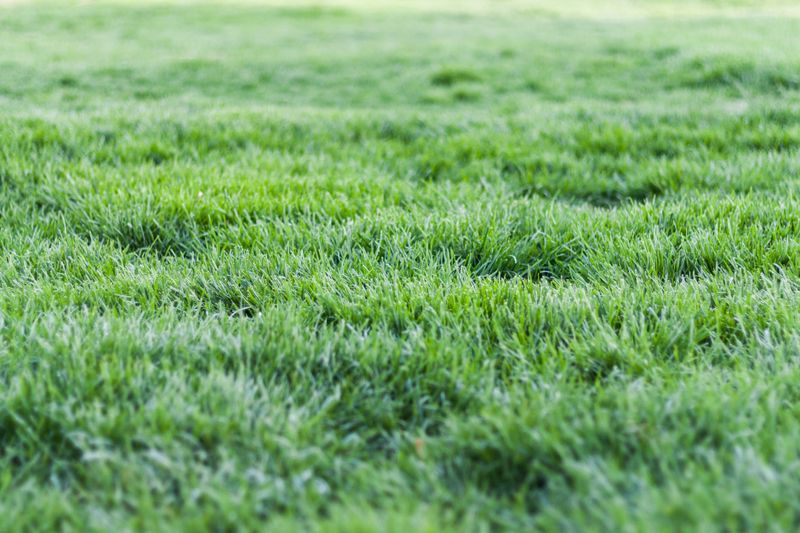
If you’ve ever watched your dog roll around in a freshly treated lawn and felt a twinge of unease, you’re not alone. The shift toward organic lawn care has accelerated in recent years — not just among committed environmentalists, but among everyday homeowners who want a beautiful lawn without the chemical inputs that conventional programs rely on.
The good news: a genuinely healthy, green, weed-resistant lawn is absolutely achievable without synthetic fertilizers, herbicides, or pesticides. It just requires a different way of thinking about what you’re actually growing.
The core principle of organic lawn care is this: feed the soil, not the grass. When your soil is biologically alive and structurally sound, grass grows the way it was designed to — deep-rooted, dense, and naturally competitive against weeds and pests. This guide shows you how to get there.
Why Soil Health Is Everything
Conventional lawn care bypasses the soil food web entirely. Synthetic fertilizers deliver nutrients directly to plant roots in soluble form, which works fast but does nothing for long-term soil biology. Over time, synthetic-only programs can actually degrade soil structure and reduce microbial diversity.
Organic lawn care works with the soil food web instead of around it. Billions of bacteria, fungi, earthworms, and other organisms in healthy soil:
- Break down organic matter into plant-available nutrients
- Create the aggregate structure that allows water infiltration and root penetration
- Suppress many soil-borne diseases and pest populations naturally
- Reduce compaction and improve drought resilience
The practical result is that an organically managed lawn, once established (typically 2–3 years), requires significantly less intervention than a conventionally managed one.
Building Soil Health: The Foundation
Composting and Top-Dressing
Compost top-dressing is the single most impactful organic lawn practice. Apply 1/4 to 1/2 inch of finished compost across your lawn once or twice per year (spring and fall are ideal). You can rent or purchase a top-dresser, or simply broadcast compost with a shovel and rake it in.
Top-dressing delivers:
- Slow-release nutrients
- Beneficial microbial populations
- Improved water-holding capacity in sandy soils
- Better drainage in clay soils over time
For best results, top-dress immediately after core aeration so compost works directly into the soil profile.
Reducing Compaction
Compacted soil is the enemy of organic lawn care. Compaction reduces oxygen in the root zone, which slows biological activity and nutrient cycling. Core aerate at least once per year — twice per year on heavily trafficked lawns.
Soil Testing
Test your soil every 2–3 years. You can’t feed the soil properly without knowing what it needs. Most organic inputs are pH-sensitive — if your soil pH is too low or too high, nutrients won’t become plant-available no matter how much you apply.
Most lawns want a pH of 6.0–7.0. Lime raises pH; sulfur lowers it. Both are naturally derived and compatible with organic programs.
Organic Fertilizer Options
Unlike synthetic fertilizers, organic fertilizers feed soil microbes, which then break nutrients down into plant-available forms. Release is slower but longer-lasting, and there’s no risk of burning grass or salt build-up.
Here’s a breakdown of the most widely used organic fertilizer sources:
Milorganite (Biosolids-Based)
Milorganite is one of the most popular organic fertilizers on the market, made from heat-dried microbes that have digested sewage solids. N-P-K: approximately 6-4-0, plus 2.5% iron for deep green color.
- Application rate: 32 lbs per 2,500 sq ft
- Slow-release; releases over 8–10 weeks
- Can be applied any time in the growing season without burn risk
- Excellent for summer use when synthetic ferts are risky
Alfalfa Meal
Alfalfa meal is a plant-based fertilizer high in nitrogen and also contains a natural growth stimulant called triacontanol. N-P-K: approximately 3-1-2.
- Excellent microbe food; dramatically increases soil biological activity
- Best applied in spring to stimulate early-season growth
- Available in pelletized form for easy spreader application
Corn Gluten Meal
Corn gluten meal serves a dual purpose: it’s both a pre-emergent weed suppressant and an organic nitrogen fertilizer. N-P-K: approximately 9-0-0.
- Apply in early spring before soil temperatures reach 50°F for crabgrass prevention
- Also apply in fall to prevent winter annual weeds
- Important caveat: Corn gluten must be applied 4–6 weeks before overseeding because it inhibits seed germination of all seeds, including grass seed. Do not use in the same season you plan to seed.
Feather Meal
A slaughterhouse byproduct, feather meal is very high in slow-release nitrogen. N-P-K: approximately 12-0-0.
- One of the highest-nitrogen organic options available
- Very slow release (months) due to the tough protein structure
- Best used as a component in a blended organic fertilizer program
Bone Meal
Bone meal is primarily a phosphorus source, ideal for supporting root development and flower/seed production. N-P-K: approximately 3-15-0.
- Use at planting time to support establishment
- Slow-release; friendly to soil biology
- Avoid over-applying phosphorus — excess can run off into waterways
Building an Organic Fertilizer Schedule
A practical organic fertilizer program for most cool-season lawns:
| Application | Timing | Product | Rate |
|---|---|---|---|
| Pre-emergent + N | Early spring | Corn gluten meal | 20 lbs/1,000 sq ft |
| Summer feed | Late spring/early summer | Milorganite | 32 lbs/2,500 sq ft |
| Summer maintenance | Midsummer | Milorganite | 32 lbs/2,500 sq ft |
| Fall main feeding | Early fall | Alfalfa meal or blended organic | Label rate |
| Pre-winter feed | Late fall | Milorganite | 32 lbs/2,500 sq ft |
For warm-season grasses, shift all applications to align with the active growing season (late spring through summer).
Organic Weed Control
This is where many people assume organic lawn care falls short. The reality: organic weed control is highly effective when you address it preventively rather than reactively.
Corn Gluten Meal as Pre-Emergent
As noted above, corn gluten meal prevents weed seeds from rooting after germination. It does not kill existing weeds — it prevents new ones from establishing. Applied consistently for 3–4 years, corn gluten significantly reduces annual weed pressure in most lawns.
Dense Turf Is Your Best Weed Defense
A thick, dense stand of grass simply leaves no room for weeds to germinate. Every organic practice that promotes turf density — proper mowing height, regular feeding, aeration, overseeding thin areas — is also a weed prevention strategy.
Mow high. Cool-season grasses mowed at 3.5–4 inches shade the soil surface and dramatically reduce crabgrass and broadleaf weed germination.
Hand Weeding Tools
For spot control of established weeds, hand removal is effective and satisfying. A quality stand-up weeder like the Fiskars Weed Puller removes dandelions and other tap-rooted weeds root and all, preventing regrowth. Work in moist soil for easiest removal.
Vinegar Herbicides: Know the Limitations
Horticultural vinegar (20% acetic acid) and citric acid-based products like BurnOut are often marketed as organic weed killers. They work — but only on the above-ground portion of the plant. They do not translocate to roots, so perennial weeds with established root systems will re-sprout.
- Best used on annual weeds early in their growth
- Apply on hot, sunny days for maximum effect
- Repeated applications will weaken perennial weeds over time but rarely kill them outright
- These products are non-selective — they’ll brown any vegetation they contact
Organic Pest Control
Grubs (White Grubs)
Grubs are among the most damaging lawn pests. Two excellent organic controls exist:
Beneficial Nematodes — Microscopic roundworms that parasitize and kill grub larvae in the soil. Beneficial nematodes (Steinernema carpocapsae or Heterorhabditis bacteriophora) are applied with a hose-end sprayer.
- Best applied in late summer when grubs are young and near the soil surface
- Soil must be moist and temperatures 60–90°F
- Results visible within 2–3 weeks
Milky Spore — A naturally occurring bacterium (Bacillus popilliae) that infects and kills Japanese beetle grubs specifically. Apply once and it persists in soil for 10–20 years in suitable climates. Note: it only targets Japanese beetle grubs, not other grub species.
Surface Insects (Chinch Bugs, Sod Webworms, Armyworms)
Spinosad — A soil-derived compound produced by a soil bacterium, spinosad is OMRI-listed for organic use and highly effective against many surface-feeding insects. Available as Monterey Garden Insect Spray and similar products.
Pyrethrin — Derived from chrysanthemum flowers, pyrethrin is fast-acting against a broad range of insects. It breaks down quickly in sunlight and soil. Use for immediate knock-down of active infestations.
Diatomaceous Earth — Food-grade DE can be applied to lawn surfaces to control crawling insects. It works by abrading the insect’s exoskeleton, causing dehydration. Most effective in dry conditions.
Grub Prevention with Beneficial Nematodes
For an organic preventive grub program, apply beneficial nematodes once per year in late July or August before grub populations become established. Combine with milky spore for a comprehensive, long-lasting Japanese beetle grub control program.
Organic Fungal Disease Control
Neem Oil
Cold-pressed neem oil is one of the most versatile organic garden products available. It contains azadirachtin, a compound that disrupts insect and fungal life cycles. For lawn disease:
- Mix 2 tablespoons of neem oil per gallon of water with a few drops of dish soap as an emulsifier
- Apply in early morning or evening (avoid midday heat)
- Effective as a preventive for dollar spot, powdery mildew, and some rust diseases
Copper Fungicide
Copper-based fungicides (copper sulfate, copper octanoate) are approved for organic use and effective against a range of fungal diseases including brown patch, dollar spot, and leaf spot. Apply preventively during humid conditions that favor disease.
Baking Soda Solutions
A 1% baking soda solution (about 4 teaspoons per gallon of water) has shown effectiveness against powdery mildew and some other fungal pathogens. It raises surface pH, creating a hostile environment for fungal spores. Best used as a preventive or at first sign of disease rather than on established infections.
Water Efficiency in Organic Lawn Care
Organically managed soils with high organic matter content hold significantly more water than depleted synthetic-fed soils. This translates directly to drought resilience and reduced irrigation needs.
Best practices:
- Water deeply and infrequently — 1–1.5 inches per week in a single or double application encourages deep rooting
- Water in early morning to reduce evaporation and foliar disease risk
- Install a rain gauge to track actual rainfall and avoid over-watering
- Raise your mowing height — taller grass shades roots and reduces moisture loss
Transitioning from Conventional to Organic
Year 1: Expect some growing pains. Your soil biology is likely depleted from years of synthetic inputs. Weeds may be more visible as you stop using herbicides. Grass may look less uniformly green than it did on synthetics. This is normal.
- Begin soil testing and correction
- Start composting and top-dressing
- Switch to organic fertilizers
- Address compaction with core aeration
- Overseed thin areas in fall
Year 2: Soil biology begins recovering noticeably. You’ll see improved water infiltration, more earthworm activity, and better drought tolerance. Weed pressure may still be significant but is starting to decrease as turf density improves.
- Continue compost top-dressing (this becomes your annual ritual)
- Add corn gluten meal to your spring program
- Begin beneficial nematode applications if grubs are an issue
Year 3: By the third year, most homeowners are pleasantly surprised. A properly fed, organic soil produces turf that’s visibly denser, greener, and more resilient than the conventional-program lawn of three years prior. Weed pressure has typically fallen significantly as the turf crowds them out.
- You’re now in maintenance mode
- Annual inputs are significantly reduced compared to the transition years
- Your lawn is providing real environmental value: carbon sequestration, reduced chemical runoff, habitat for beneficial insects
Top Organic Products to Know
- Milorganite — Versatile, slow-release, widely available
- Espoma Organic Lawn Food — A balanced blend formulated for organic programs
- Jonathan Green Organic Lawn Food — Another solid option with mycorrhizal inoculants
- Neem oil concentrate — For pest and disease control
- Beneficial nematodes — For grub prevention
- Whitney Farms Compost — Widely available bagged compost for top-dressing
Conclusion
Organic lawn care is not a compromise — it’s a different philosophy that produces genuinely superior results when properly executed. The upfront investment in soil health pays compounding dividends: better drought tolerance, more natural pest resistance, lower long-term input costs, and a yard that’s safe for kids, pets, and pollinators.
The biggest shift is patience. You’re not spraying a quick fix; you’re building a system. Give it three years of consistent effort, and you’ll have a lawn that most conventional-program yards simply can’t match.
Start with a soil test, commit to annual compost top-dressing, and let the biology do the heavy lifting. The results will speak for themselves.

TurfTech HQ Editorial Team
Independent trade-focused editorial team