Spray heads vs. rotors vs. rotary nozzles
Quick answer
Use fixed sprays for compact areas that can accept a comparatively fast application, rotors for larger open turf, and rotary nozzles where lower flow and slower precipitation suit small-to-medium or irregular zones. Final selection depends on measured pressure and flow, radius, soil intake, wind, slope, plant needs, and matched precipitation.
Common questions
- Can spray heads and rotors be installed on the same zone?
- Usually they should not be mixed because their precipitation rates often differ. A manufacturer may document specific matched combinations, but compatibility must be verified with current performance data rather than assumed.
- Are rotary nozzles the same as gear-driven rotors?
- No. A rotary nozzle typically fits a spray body and produces multiple rotating streams. A gear-driven rotor is a larger sprinkler with an internal drive mechanism and generally serves larger areas.
- Which sprinkler type is best for a slope?
- A lower precipitation rate often helps soil accept water with less runoff, making some rotary nozzles or rotor configurations useful. Soil, grade, pressure, spacing, cycle-and-soak scheduling, and local conditions still determine the design.
Source note: Reviewed against Rain Bird sprinkler-selection guidance and the Hunter MP Rotator design guide. Performance ranges and compatible combinations must be verified in current manufacturer charts for the exact bodies, nozzles, arcs, pressure, and spacing.
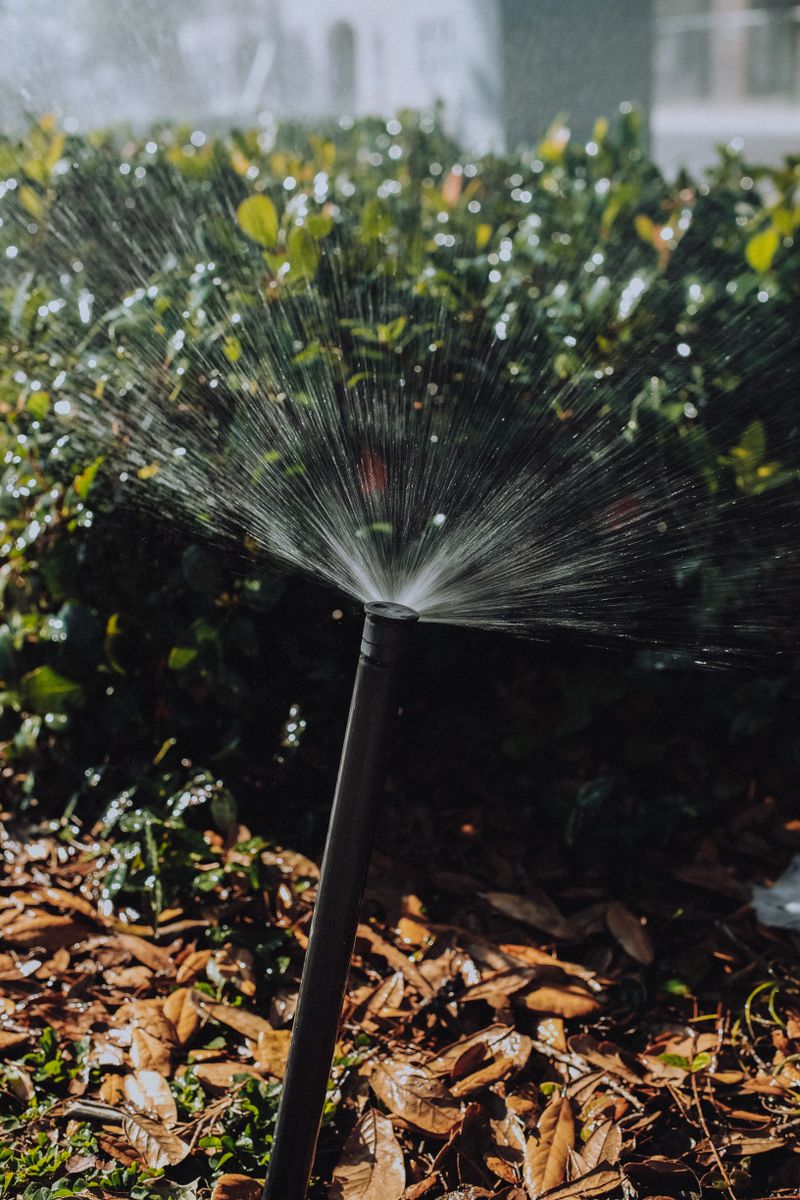
Choosing a sprinkler is not a contest between three product labels. It is a zone-design decision: which device can cover the shape at the available pressure and flow, apply water no faster than the soil can accept it, and match every other device on the valve?
Fixed spray heads, gear-driven rotors, and rotary nozzles can all produce healthy turf when they are selected and spaced correctly. Problems begin when a designer chooses by appearance, ignores performance charts, or mixes unlike application rates on one schedule.
Quick comparison
| Factor | Fixed spray heads | Gear-driven rotors | Rotary nozzles |
|---|---|---|---|
| Typical fit | Small, compact turf and shaped areas | Medium-to-large open turf | Small-to-medium, narrow, or irregular areas |
| Water pattern | Continuous fan | One or more rotating streams from a driven turret | Multiple rotating streams from a nozzle on a spray body |
| Relative flow | Higher for a given small area | Suited to larger-radius layouts | Lower flow can allow more devices within supply limits |
| Relative precipitation | Often faster | Generally slower than fixed sprays | Generally slow; product families differ |
| Wind behavior | Fine droplets can drift or mist | Larger streams generally resist wind better | Multi-stream droplets often resist wind better than fine spray |
| Best design strength | Precise small-area patterns | Efficient coverage of broad turf | Retrofit and design flexibility with slower application |
| Common mistake | Overspray and runoff | Using a rotor where the area is too small | Assuming all rotary nozzle families can share a zone |
These are design tendencies, not specifications. Use the manufacturer’s current chart for radius, pressure, flow, precipitation, arc, spacing, and compatible body.
Fixed spray heads
A fixed spray nozzle throws a continuous fan over its arc. The body rises under pressure and retracts after the cycle. Nozzle patterns include full and part circles, strips, corners, and other shapes.
Where fixed sprays work well
- Compact lawn panels
- Areas where a defined strip or corner nozzle matches the geometry
- Zones with enough flow for the intended nozzle set
- Level, permeable soil that can accept the application rate
- Sites where short runtimes are useful and runoff can be controlled
Tradeoffs
Fixed sprays can apply water quickly. On slopes or compacted clay, that may exceed soil intake unless scheduling uses shorter cycles with soak time. Excess pressure can create misting and drift; Rain Bird recommends pressure control rather than accepting the distorted pattern.
Because spray droplets are comparatively fine, wind can reduce distribution. Pressure-regulated bodies, correct nozzles, good spacing, and watering during appropriate conditions improve results.
Gear-driven rotors
A gear-driven rotor sends a stream across an adjustable or fixed arc while an internal mechanism turns the turret. Rotors are associated with broader turf areas and longer throw than typical spray nozzles.
Where rotors work well
- Large, open lawn panels
- Athletic, commercial, and estate turf
- Layouts where longer radius reduces head count
- Sites that benefit from a slower application than conventional sprays
- Areas exposed to some wind, subject to product and site design
Tradeoffs
A rotor needs enough space to develop its pattern and enough operating pressure to reach its designed radius. Squeezing a large-radius rotor into a small bed edge creates overspray and poor uniformity. Obstructions can also interrupt the stream.
Part-circle and full-circle devices on a zone must deliver proportional flow if they are to achieve matched precipitation. “Same rotor family” does not remove the need to select the correct nozzles and arcs.
Rotary nozzles
A rotary nozzle installs on a compatible spray body and sends several rotating streams. It occupies a useful middle ground: more radius and lower flow than many fixed sprays, but generally in a smaller format than a conventional rotor.
Where rotary nozzles work well
- Spray-zone retrofits constrained by available flow
- Narrow strips, corners, and irregular turf
- Slopes or slower-intake soils that benefit from lower precipitation
- Small-to-medium lawn panels needing multi-stream coverage
- Designs that need several radius and arc choices within one product family
Hunter’s MP Rotator guide emphasizes head-to-head coverage, matched precipitation within compatible product groups, pressure regulation, and separate zoning for product series with different precipitation characteristics. It also notes that field conditions affect actual uniformity.
Tradeoffs
Lower flow does not mean no design work. Rotary nozzles still require correct pressure, filtration, spacing, arc, and runtime. Their slower precipitation usually requires a longer runtime than a fixed spray to apply the same depth.
Do not mix a standard rotary nozzle family with a higher-precipitation short-radius family merely because both attach to the same style of body. Verify compatibility in current data.
Five decisions that matter more than the label
1. Available pressure and flow
Measure the supply under realistic flow conditions and account for losses through the connection, backflow assembly, master valve, zone valve, elevation, pipe, and fittings. A nozzle chart describes performance at the sprinkler, not at the water source.
If an existing zone performs weakly, diagnose it with the one-zone low-pressure workflow before redesigning around a fault.
2. Radius, shape, and head-to-head coverage
Select a pattern that fits the irrigated area without routinely watering walls, pavement, vehicles, or neighboring property. Place sprinklers so the water from one reaches the next as the manufacturer requires. A long advertised maximum radius is not a substitute for overlapping coverage.
3. Precipitation-rate compatibility
Rain Bird advises avoiding devices with different precipitation rates on the same valve. Otherwise, enough runtime for one portion can overwater another. Matched-precipitation nozzles provide proportional flow for different arcs within a documented family.
There can be manufacturer-approved exceptions, but confirm the exact nozzle, arc, spacing, and pressure combination. Do not treat an exception as permission to mix categories freely.
4. Soil, slope, climate, and plants
The application rate should not exceed soil intake. Slopes and tight soils may need lower-precipitation devices plus cycle-and-soak scheduling. Wind may favor streams or low-angle options, while plant beds may call for drip rather than any turf sprinkler.
Separate turf from shrubs and areas with meaningfully different sun, soil, slope, or water demand. The sprinkler installation guide explains this hydrozone approach.
5. Maintenance environment
Consider water quality, filtration, mower exposure, soil movement, service access, pressure regulation, and replacement availability. A nozzle that tests well on day one still needs a body set at grade, a clean screen, and a serviceable valve.
Use our guide to a sprinkler valve that will not shut off when a valve fault—not head selection—keeps a zone flowing.
A practical selection workflow
- Map irrigated shapes, elevations, hardscape, plants, slopes, and wind exposure.
- Measure available dynamic pressure and flow.
- Choose the device category that fits each area.
- Lay out head-to-head coverage using current manufacturer data.
- Total nozzle flow for each valve at the design pressure.
- Verify matched precipitation within every zone.
- Account for soil intake and plan cycle-and-soak where needed.
- Install pressure regulation and filtration when specified.
- Audit with catch cans, then adjust runtime from measured output and landscape response.
For controller features, scheduling, and station capacity, see the smart sprinkler controller guide. A smart controller cannot correct incompatible precipitation rates or missing coverage; it only schedules the hydraulic design it is given.
Choose the zone as a system
Fixed sprays are often the practical choice for compact geometry, rotors for broad open turf, and rotary nozzles for lower-flow multi-stream coverage in small-to-medium or irregular spaces. None is automatically most efficient.
The efficient choice is the one that fits the measured supply, covers head to head, matches precipitation across the zone, and applies water at a rate the site can accept. Confirm that conclusion with performance charts and a catch-can audit rather than product category alone.
Sources

TurfTech HQ Editorial Team
Independent trade-focused editorial team