Zero-turn mower pulls to one side: Diagnostic guide
Quick answer
If a zero-turn mower pulls to one side only during straight travel on a flat surface, first compare cold tire pressure and verify the operator is moving both controls evenly. A steady pull with equal power may be a model-specific tracking issue. One side that is weak, stops moving, fades when hot, leaks, or makes abnormal noise points to a drive, brake, belt, control, or hydraulic fault that should not be hidden with a tracking adjustment.
How to diagnose a zero-turn mower that pulls to one side
Separate a simple straight-line tracking complaint from a weak, dragging, nonmoving, or heat-fading drive side.
1. Classify the symptom
Record whether the mower merely veers, feels weak on one side, loses one drive wheel, changes when hot, or shows noise or leakage.
2. Make the mower safe
Park on a firm level surface, disengage the PTO, place the controls in the specified park or neutral position, set the brake, shut off the engine, remove the key, and wait for all moving parts to stop.
3. Check the simple variables
Measure cold drive-tire pressure against the exact manual, remove an approved attachment or load for the comparison when directed, and confirm the test surface is flat.
4. Compare operating conditions
In a clear level area, note forward and reverse response, control position, cold-versus-hot behavior, engine speed, and whether the deck is engaged without attempting an unsafe full-speed test.
5. Inspect only accessible drive items
With the mower disabled, follow the manual to inspect visible controls, bypass position, brake release, belt condition, cooling areas, damage, and leakage without removing guards for a live test.
6. Choose adjustment or service
Use a tracking procedure only when the model manual and symptoms support it. Stop and arrange qualified service for loss of drive, leaks, abnormal noise, unsafe control response, guarded live testing, or internal hydraulic work.
Common questions
- Why does my zero-turn mower pull to one side?
- Start with cold drive-tire pressure, a flat test surface, even control input, and any attached load. If both sides remain strong but the mower consistently veers at straight-ahead speed, the exact model manual may provide a tracking check. Weakness, drag, noise, leakage, or heat-related fade requires drive-system diagnosis instead.
- Can I fix a weak side by adjusting the tracking?
- Not unless the symptom and model manual specifically identify a tracking problem. A tracking adjustment changes straight-line speed balance; it does not repair a dragging brake, slipping belt, damaged linkage, disengaged bypass, hydraulic leak, or worn hydrostatic unit.
- Why will one side of my zero-turn mower not move?
- Possible causes include a bypass or tow valve left in the release position, disconnected or damaged control linkage, a belt-drive fault, brake drag, or a failed drive unit. Shut the machine down and follow the exact model's parked inspection procedure rather than driving it on one wheel.
- Is a zero-turn mower that gets weak on one side when hot a tracking problem?
- Usually not. A repeatable hot-only symptom can involve cooling airflow, belt grip, fluid condition on a serviceable system, brake drag, or internal hydrostatic wear. Record the warm-up time and conditions, then use a heat-fade diagnostic and model-specific service information.
Source note: Reviewed against official Toro TITAN operator guidance and Cub Cadet's manufacturer troubleshooting article. Tire pressures, tracking adjustments, bypass controls, belts, fluids, and hydraulic procedures vary by model and serial number; use the exact operator and service documentation before adjusting or opening any drive component.
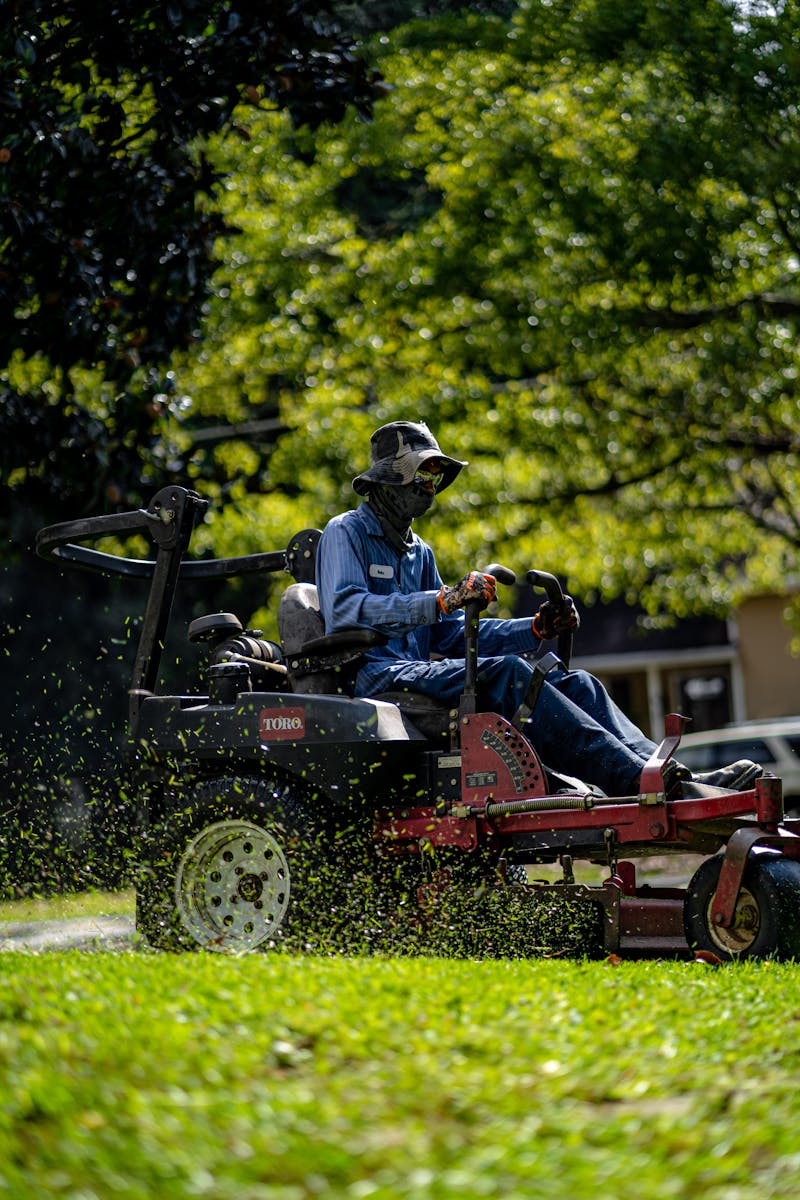
When a zero-turn mower pulls to one side, the safest first question is not “Which bolt do I turn?” It is whether both drive sides still produce equal power.
If the mower simply veers during straight travel on firm, level ground, check cold tire pressure and control input before consulting the model’s tracking procedure. If one side is weak, drags, stops, worsens when hot, leaks, or sounds abnormal, treat it as a drive-system fault—not a tracking adjustment.
Zero-turn mower pull diagnosis at a glance
| What you observe | First safe check | What it suggests |
|---|---|---|
| Steady veer on a flat surface; both sides feel strong | Cold drive-tire pressure, load, control position | Tire mismatch, operating input, or model-specific tracking |
| One side is slower in forward and reverse | Brake release, bypass position, visible linkage, drive belt path | Drag or incomplete power transfer on that side |
| One side is weak only after warm-up | Cooling airflow, belt behavior, time and load | Heat-related drive fault; use the hot hydrostatic power-loss diagnostic |
| One drive wheel will not move | Stop operating; inspect only as the manual allows | Bypass, linkage, belt, brake, or drive-unit fault |
| Pull begins with noise, burning odor, or leakage | Shut down and remove the key | Service condition, not a tracking correction |
| Mower drives straight but leaves one side of the cut low | Tire pressure, deck, blade, and turf conditions | Follow the uneven-cut and uncut-strip guide |
Tracking can limit the faster side; it cannot restore a weak side or release a dragging brake.
Make the machine safe before inspecting it
Move away from slopes, traffic, water, drop-offs, and bystanders. Park level, disengage the PTO, put the controls in the specified park or neutral position, set the brake, stop the engine, remove the key, and wait for moving parts to stop. Let hot components cool.
Never work beneath an unsupported mower, run it with a guard removed, or bypass a seat, brake, PTO, or control interlock. Do not use a hand to search for a hydraulic leak. Pressurized fluid can penetrate skin and requires immediate medical care.
If the mower is stranded, use only the manual’s towing or bypass procedure. An incorrectly reset bypass can leave one side unable to drive.
Record the symptom before changing anything
Use the same notes for the first test and post-repair check:
- Mower model, serial number, hours, and drive-system type
- Left or right side affected
- Cold tire pressures and the manual specifications
- Firm level surface, slope, wet turf, ruts, or soft ground
- Forward response, reverse response, and lever positions
- Engine speed and whether the PTO is engaged
- Minutes of operation before the pull begins
- Attachment, bagger load, trailer, or counterweight fitted
- Recent tire, belt, brake, linkage, fluid, filter, or towing work
- Noise, odor, heat warning, debris buildup, or visible leakage
Change one variable at a time. Written comparisons are more useful to a technician than “it sometimes steers funny.”
1. Confirm the surface, load, and control input
Test only in a clear area the operator manual permits. A side slope, soft soil, wet grass, a rut, or a loaded bagger can change traction. Remove an attachment only if its manual permits it; keep required counterweights.
Zero-turn steering depends on matched control input. New operators should practice smooth, even lever movement at a conservative speed. If the complaint disappears on a firm, level surface with the machine unloaded, investigate the original surface and load before adjusting anything.
2. Compare cold tire pressure
Measure both rear drive tires cold with the same accurate gauge. Use the pressure printed in the exact operator manual or the manufacturer’s applicable instructions; do not copy another mower’s PSI.
A pressure or tire-size mismatch changes rolling radius and can create a pull. Inspect for damage, uneven wear, a slow leak, a mismatched replacement, and a wheel that is visibly loose. Correct the underlying tire problem before evaluating tracking. Cub Cadet lists tire-pressure imbalance as a primary cause of one-direction pull, while Toro places its pressure check directly before tracking guidance.
3. Separate tracking from genuine weakness
A tracking complaint is narrow: both sides respond normally, but the mower repeatedly veers during straight-ahead travel on a firm, level surface. A weak-side complaint includes slower acceleration, reduced reverse, a lever that no longer produces the expected response, or a wheel that stops under ordinary load.
Toro’s TITAN instructions, for example, provide a specific tracking adjustment for forward travel. That procedure belongs to those models and must not be generalized to another brand or drive layout. Find the manual by model and serial number, confirm the stated test conditions, and use only its adjustment point and direction.
Do not use tracking to compensate for a suddenly weak side. It may only reduce the healthy side and conceal a developing fault.
4. Inspect accessible mechanical controls with the mower off
After shutdown, check only items the owner documentation makes accessible. Depending on the model, those may include:
- Motion-control levers that align and move without obvious looseness or binding
- A bypass or freewheel control fully returned to its operating position
- A parking-brake linkage that appears to release as specified
- Visible linkage that is connected and not bent or obstructed
- An accessible drive belt with no glazing, cracking, oil contamination, debris, or obvious loss of tension
- Cooling screens, fans, and fins free of packed grass when the manual permits cleaning
Do not reach around a belt or fan, improvise a spring, bend a linkage, or use makeshift supports. A procedure requiring guarded live operation belongs with a qualified technician.
5. Use operating condition to narrow the fault
If one side is weak from the first cold movement, focus on an incorrectly positioned bypass, brake drag, control travel, visible linkage, and mechanical drive. If the response is different in forward and reverse, record that detail rather than assuming the hydrostatic unit has failed.
If both sides are normal cold but one fades after a repeatable time or load, do not keep mowing until it quits. Record warm-up time, ambient conditions, engine behavior, cooling condition, and whether performance returns after cooling. The hydrostatic mower hot-power guide keeps that heat-fade diagnosis separate.
If the engine itself surges or loses speed, diagnose the engine before blaming one drive side. If the machine does not start at all, use the zero-turn mower no-start decision tree instead.
6. Stop when one wheel will not move
A mower that drives on only one side can spin unexpectedly and may not steer or stop predictably. Do not drive it back to the shop across a slope or public area.
Check whether a bypass control was used during transport or service and reset it only by the manual. Otherwise, a nonmoving side can involve disconnected control hardware, drive-belt failure, brake drag, or an internal drive problem. Arrange recovery and service if the parked checks do not identify a permitted correction.
7. Keep hydraulic work inside the service boundary
Some zero-turn mowers use serviceable reservoirs and filters; others use sealed units. Fluid type, level-check temperature, fill point, purge method, and service interval are not interchangeable.
Stop for wet fittings, pooled fluid, damaged hoses, abnormal hydro noise, a burning odor, or an overheat warning. Follow the manufacturer procedure for depressurization and external leak inspection. Use cardboard or paper—not skin—only where the documentation permits it.
Opening lines, changing relief settings, pressure or flow testing, raised-wheel purging, and internal repairs require model-specific equipment and training. The commercial mower maintenance checklist helps crews catch leaks, belt damage, cooling blockage, and tire problems before a route.
What not to adjust by guesswork
Avoid turning a tracking bolt, neutral linkage, control stop, brake adjustment, or relief because it resembles an online video. The same-looking component may serve another purpose on your model.
Do not add thicker oil, an additive, or unspecified fluid to “strengthen” one side. Do not overinflate one tire to steer against the pull. These shortcuts can hide evidence, change braking and stability, or damage the drive system.
Verify the repair under controlled conditions
Restore every guard and confirm the controls return as designed. Retest on the same level surface with the same recorded tire pressures and load. Compare forward and reverse response cold, then cover the operating condition that originally triggered the pull without exceeding the manual’s limits.
Stop if the mower still veers, loses response, leaks, overheats, or makes abnormal noise. Record what changed and provide the worksheet to the dealer or qualified technician. If recurring drive trouble is part of a replacement decision, compare transmission serviceability and dealer support in the zero-turn mower buying guide.
Sources

TurfTech HQ Editorial Team
Independent trade-focused editorial team