Zero-turn mower won’t start? Diagnose it by symptom
Quick answer
If a zero-turn mower won’t start, first disengage the PTO, set the parking brake, move the steering levers to the model’s start position, and sit in the seat if the manual requires it. Then diagnose the sound: silence suggests start-state, battery, fuse, or circuit trouble; clicks usually point to low battery current or poor connections; normal cranking shifts attention to fresh fuel, choke position, airflow, and ignition. Never bypass a safety interlock to test it.
How to diagnose a zero-turn mower that won’t start
Sort a zero-turn mower no-start by sound before checking its start state, battery, fuel, air, and service boundaries.
1. Make the mower safe
Park outdoors on level ground, disengage the PTO, set the parking brake, place the controls in the specified start position, remove the key before inspections, and keep sparks away from fuel and the battery.
2. Identify the sound
Turn the key only long enough to distinguish silence, rapid clicks or buzzing, one solid click, normal cranking, or an engine that starts and dies.
3. Confirm the normal start state
Follow the model manual for the PTO, parking brake, steering levers, seat, choke, throttle, and fuel-valve positions. Do not bypass an interlock.
4. Check the battery path
Inspect the battery case, terminals, cables, and correct fuse with the machine isolated. Charge and test the specified battery by the manual; replace a fuse only with its exact rating.
5. Check fuel, air, and ignition basics
For an engine that cranks normally, verify fresh correct fuel, valve position, air-filter condition, choke use, and secure spark-plug boots without opening hot fuel or ignition systems.
6. Stop at the repair boundary
Use a qualified technician for fuel leaks, damaged wiring, repeated fuse failure, interlock repair, guarded live tests, or a no-start that remains after the operator checks.
Common questions
- Why does my zero-turn mower click but not start?
- Rapid clicking or buzzing usually means battery voltage collapses under starter load or a battery connection is loose or corroded. One solid click can also involve the starter circuit. Charge and test the correct battery, clean and tighten connections by the model manual, and refer persistent single-click faults for service rather than bridging terminals.
- Why does my zero-turn mower crank but not start?
- Normal cranking means the starter is turning the engine, so check for fresh fuel, an open fuel valve when fitted, the correct cold- or warm-start control position, an unobstructed air filter, and securely fitted spark-plug boots. Fuel-system, ignition, compression, or control faults that remain after those checks need model-specific diagnosis.
- Can I bypass a zero-turn mower safety switch to see if it is bad?
- No. A bypass can let the engine start or the blades engage when the operator is not safely positioned. Confirm the normal start sequence in the operator manual and have a qualified technician test or replace an interlock that does not recognize the correct control positions.
Source note: Reviewed against current Toro zero-turn help, Toro operator-manual troubleshooting, Husqvarna zero-turn support, and Briggs & Stratton small-engine guidance. Starting sequences, battery specifications, fuse locations, fuel requirements, and service procedures vary, so use the manuals for the mower and engine model.
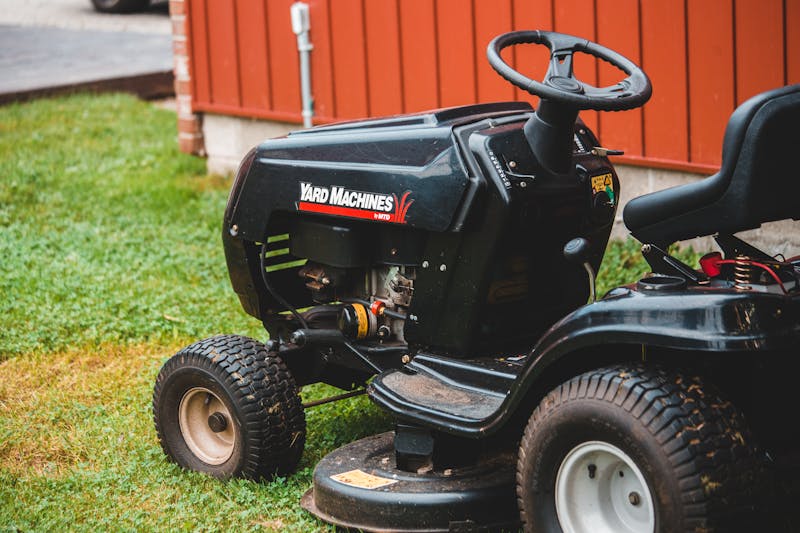
When a zero-turn mower won’t start, the sound it makes is the fastest way to choose the right checks. Silence, rapid clicking, normal cranking, and a start-then-die complaint point to different systems.
Begin with the normal starting sequence: PTO off, parking brake set, steering levers in the manual’s start position, and the operator in the seat when required. Then use the decision tree below. Never defeat an interlock to make the mower crank.
Zero-turn mower no-start decision tree
| What happens at the key | Check first | Likely system |
|---|---|---|
| No sound and no dash lights | Battery connection, battery state, main fuse | Battery or main electrical supply |
| Dash lights work but there is no click | PTO, brake, lap-bar and seat start state; fuse | Start-permission or control circuit |
| Rapid clicks or a buzz | Battery charge and terminal contact | Low cranking current |
| One solid click | Battery under load, cables, starter circuit | High-current starting circuit |
| Engine cranks normally but never fires | Fresh fuel, fuel valve, choke, air filter, plug boots | Fuel, air, or ignition |
| Engine starts and then dies | Choke use, fuel flow, tank vent, filter, fuel quality | Fuel delivery or airflow |
| Restarts cold but not hot | Warm-start control position, flooding, heat-related fault | Fuel mixture, ignition, or internal engine condition |
Use both manuals: the mower manufacturer defines interlocks and wiring, while the engine manufacturer defines fuel, choke, plug, and air-filter procedures.
Before touching the mower
Park outdoors on firm, level ground away from dry grass and ignition sources. Disengage the blades, set the brake, place the controls in the specified position, stop the engine, remove the key, and wait for moving parts to stop.
Let hot parts cool before fuel work. Wear eye protection around the battery, and follow the manual’s isolation order before cleaning terminals. Never bridge a solenoid, jump starter terminals, oversize a fuse, or bypass an interlock.
1. Nothing happens when you turn the key
First repeat the published start sequence. Toro, for example, directs operators to disengage the PTO, set the brake, sit in the seat, and confirm the battery, connections, fuse, and fuel. Other models may require the lap bars fully outward.
If the lights are also dead, inspect the battery case and accessible connections with the key removed. Look for a loose clamp, corrosion, broken cable end, or swollen battery. Confirm that any battery disconnect is in the run position.
If lights work but the starter remains silent, recheck every start condition. A machine that does not recognize the correct positions may have a switch, relay, connector, or wiring fault requiring model-specific testing.
Inspect only fuses the operator manual identifies as user-serviceable. Replace a failed fuse with the exact type and amperage. If the new fuse opens again, stop; repeated fuse failure signals a short or component fault that needs repair.
2. The mower clicks or buzzes but will not crank
Rapid clicking usually means an undercharged battery or poor terminal connection cannot supply starter current. Dash lights do not prove the battery is healthy.
With the mower isolated:
- Check that the battery is the specified type and is not cracked, swollen, or leaking.
- Inspect terminal clamps and accessible cable ends for looseness, corrosion, or heat damage.
- Charge it with a compatible charger using the manual’s settings and ventilation precautions.
- Use the specified voltage or load test; resting voltage alone does not prove cranking capacity.
One firm click can still come from a weak battery or cable resistance. If charge and connections test correctly, the starter circuit or engine needs service. Do not bridge terminals; arcing and unexpected cranking make that unsafe.
3. The engine cranks normally but will not fire
“Cranks” means the starter turns the engine at a normal speed. Once that happens, move away from the start-permission circuit and check the basics that support combustion.
Fuel
Confirm the tank contains the fresh fuel grade specified for the engine and that the fuel shutoff valve, when fitted, is open. Toro tells owners to rule out dirt, water, and stale fuel; Briggs & Stratton also identifies old or contaminated fuel as a common post-storage no-start cause.
A closed valve, blocked filter, pinched line, contaminated carburetor, or failed fuel-control component can leave fuel in the tank but none at the engine. Never siphon by mouth, drain onto the ground, or open a hot fuel system.
Choke and throttle
Use the cold-start position in the engine manual. For a warm engine, Husqvarna advises that leaving the choke on can flood the cylinder. Move the controls to the documented warm-start setting and allow a flooded engine to rest as instructed rather than cranking continuously.
Observe the manual’s cranking limit and cooling interval. Repeated attempts overheat the starter and flatten the battery.
Air and spark-plug connections
Inspect the air filter by the engine manual. Replace a damaged, saturated, or clogged element with the correct part; do not run the engine without the filter as a test.
After the engine is cool and isolated, confirm each spark-plug boot is seated. Plug removal, gap, torque, and replacement are engine-specific. Use a spark tester only if the manual permits it and you can follow its safe cranking procedure.
4. It starts, then dies
Note whether the engine runs for one second, thirty seconds, or until the choke is moved.
Check for:
- A fuel valve that is partly or fully closed
- Stale or water-contaminated fuel
- A restricted fuel filter or line
- A blocked tank-vent path identified in the manual
- A clogged or fuel-soaked air filter
- Incorrect choke position after startup
- A seat or control state that stops the engine when the operator moves the levers or releases the brake
Do not operate with the fuel cap loose or a safety control held in place. An interlock that shuts the machine down incorrectly needs professional testing.
5. It will not restart when hot
A hot no-start needs two observations: does the engine crank normally, and does it restart after cooling? Slow cranking points back toward the battery, cables, starter, or an internal mechanical condition. Normal cranking shifts attention toward warm-start mixture, fuel delivery, ignition, and engine condition.
Make sure the choke is not still engaged. For possible flooding, follow the manual’s recovery procedure and wait. Tank-vent, ignition, valve-clearance, compression, or fuel-control faults need controlled model-specific tests.
Record runtime, outside temperature, warning lights, odor, and cooling time. If the engine runs but the mower loses ground-drive power when hot, use the separate hydrostatic mower hot-power diagnostic instead; that is not a starting fault.
6. It will not start after winter or storage
Post-storage failures often combine a discharged battery with degraded fuel. Charge and test the battery as specified, inspect terminals, and look for rodent-damaged wiring.
Follow the engine maker’s procedure for removing unsuitable fuel and use a local hazardous-waste or recycling program. Fresh fuel will not remove water, varnish, or debris already in the carburetor.
Next time, use the specified fuel-storage method and approved battery charger. Add those steps to the commercial mower maintenance checklist so fleet work follows each unit’s hour meter and manual.
When to stop and call a mower technician
Arrange service when you find:
- Fuel leakage, a strong persistent fuel odor, or fuel near wiring or hot surfaces
- A swollen, cracked, leaking, or repeatedly discharged battery
- Melted insulation, a hot cable, smoke, arcing, or a fuse that fails again
- A safety interlock that does not recognize the correct operating state
- One solid click after the battery and connections pass the specified tests
- Repeated starter overheating or abnormal mechanical resistance
- A no-start that needs guarded live testing, carburetor work, compression testing, valve adjustment, or ignition-module diagnosis
Provide the mower and engine models, exact symptom, battery test result, fuel age, and last successful operating date.
Next step: prove the repair safely
After correcting an operator-serviceable cause, reinstall every cover, guard, and boot. Remove tools, clean spills, and perform the manual’s safety-system test.
Start the mower from the operator position, let it stabilize, and confirm there are no warning lights, leaks, abnormal noises, or fuel odors. Then engage and move the controls only in the documented sequence. If you are deciding whether an unreliable older unit is worth further repair, the zero-turn mower buying guide explains service access and ownership trade-offs without replacing this starting-system diagnosis.
Sources
- Toro residential help: zero-turn mower will not start
- Toro zero-turn operator manual: starter and engine troubleshooting
- Husqvarna zero-turn support: engine clicks but will not start
- Husqvarna zero-turn support: engine turns over but will not start
- Briggs & Stratton small-engine problem-solving guide

TurfTech HQ Editorial Team
Independent trade-focused editorial team